Quantification and Mathematics

Quantification is the process by which the size of a quantity is determined. It involves measuring quantities to determine their magnitude. But some quantities require some math to determine their magnitude since they are not measured by one tool. For example, the area of a space is determined mathematically as there is no one tool for measuring the area of a space, instead the length and breadth of the space is measured and then mathematically operated on.
Humans quantify for so many reasons. These are a few:
- Humans quantify most times just to find the magnitude of quantities.
- Humans also quantify quantities to understand or establish relationships between quantities. For instance, it is through quantification that economists were able to find the inverse relationship between price and demand index. Also, a business man could establish a relationship between turnover of staff and salary bonuses.
- Humans quantify to model whole systems. For example, the physics model of the universe was possible due to quantifications done in different times and places.
Every quantity usually has a magnitude and a unit. The magnitude can be represented with a number, if the quantity is fixed and known. But if the magnitude is not fixed nor known, it is represented with a suitable alphabet. The unit is a character or collection of characters that is used to hint the kind of quantity that is represented. For example: the length of your television may be 22 inches.
Mathematics is the theory of calculating between quantities and communicating them. In simple language, mathematics is the practice of performing calculations on numbers or alphabets representing quantities so to determine an unknown number or relationship (equation).
Every mathematical expression or equation contains two main groups of symbols:
- Numbers or alphabets, and
- Operators.
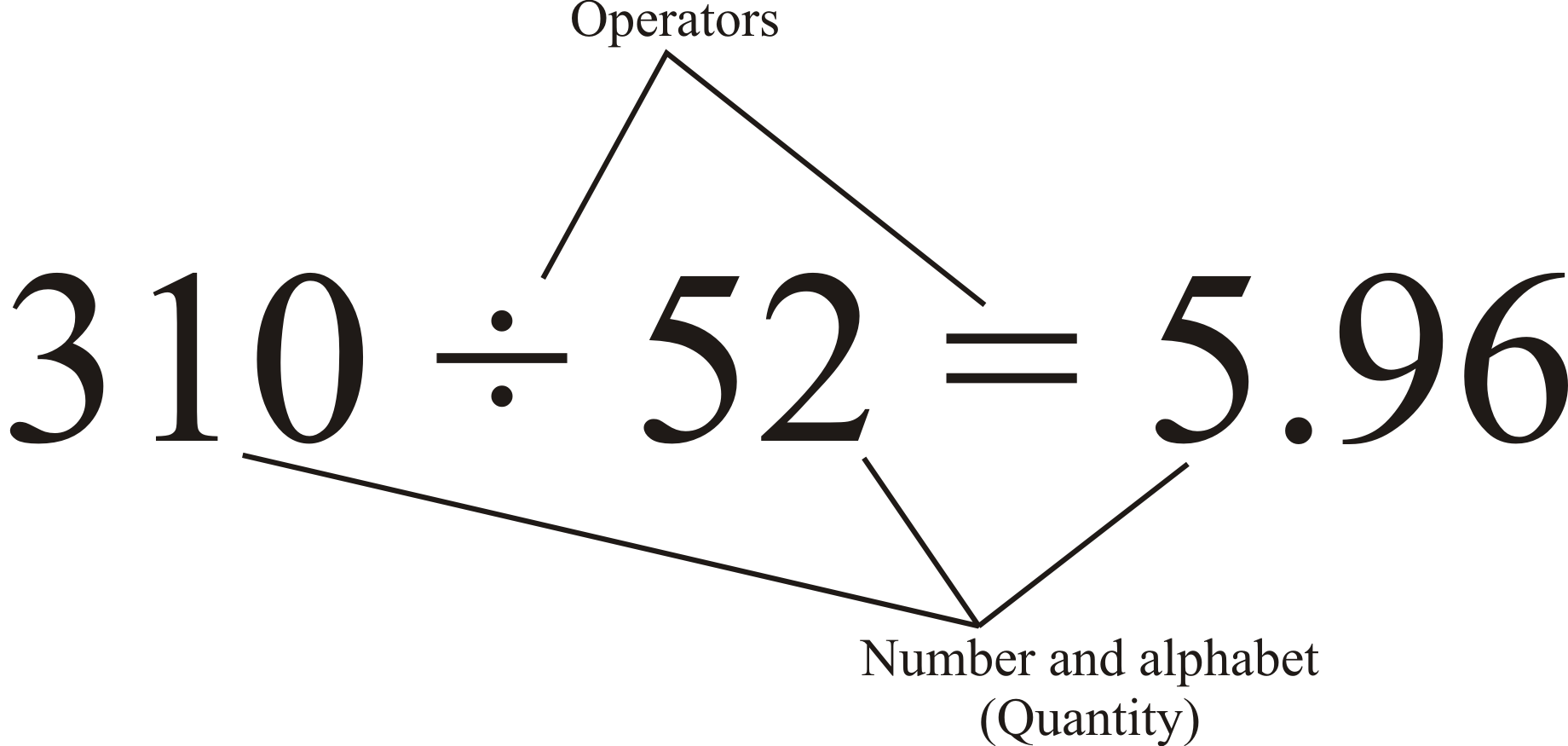 Fig. 1 | From figure 1, you see the operators and the numbers. ? (divide by) and = (equals to) are the operators in the equation. 310 (three hundred and ten), 52 (fifty two), and 5.96 (five point nine six) are the numbers in the equation. The numbers represent the magnitude of the quantities. | ||
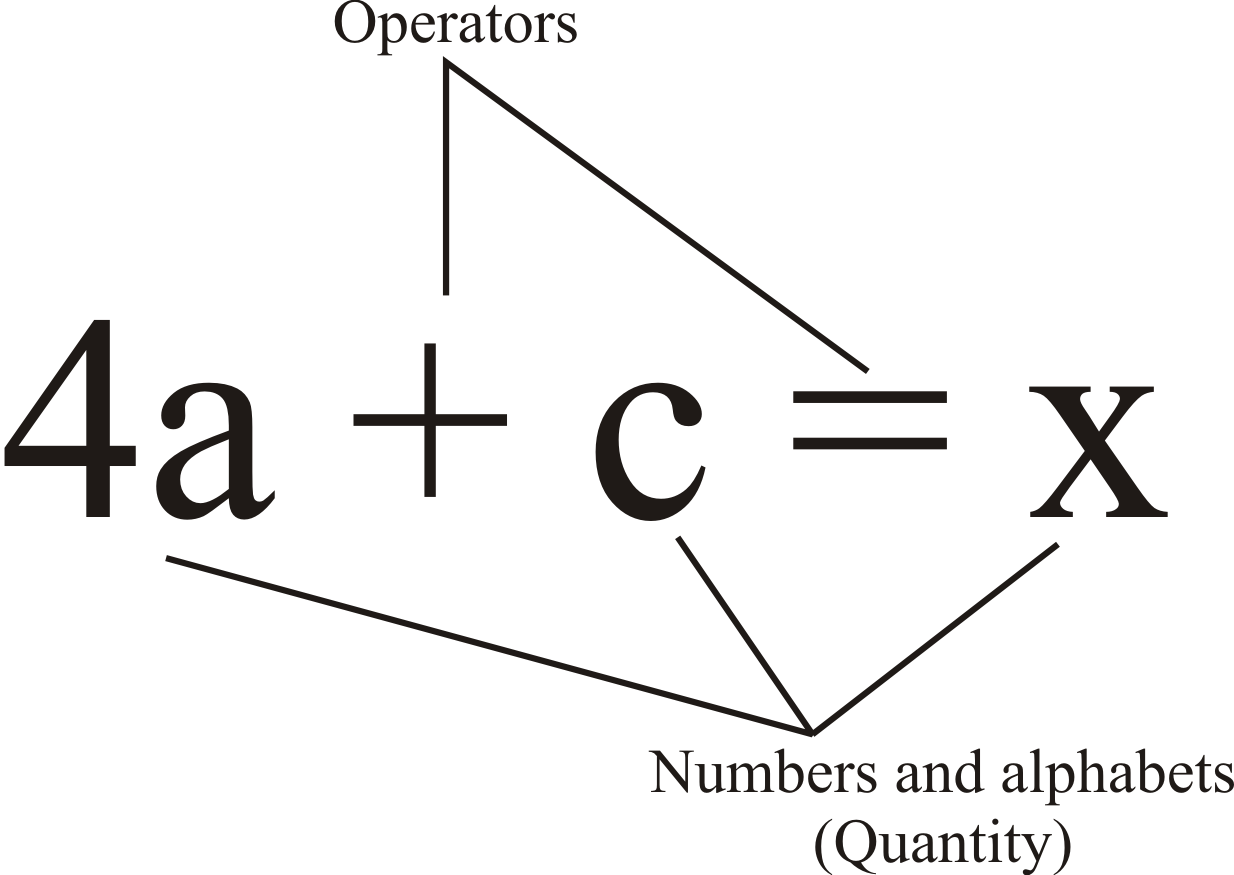 Fig. 2 | From figure 2, you would see that numbers and alphabets are used. The numbers and alphabets both represent quantities. But different alphabets represent different quantities, for example a, c, and x represent different quantities. The operators in this case are + (plus, addition) and = (equals to). | ||
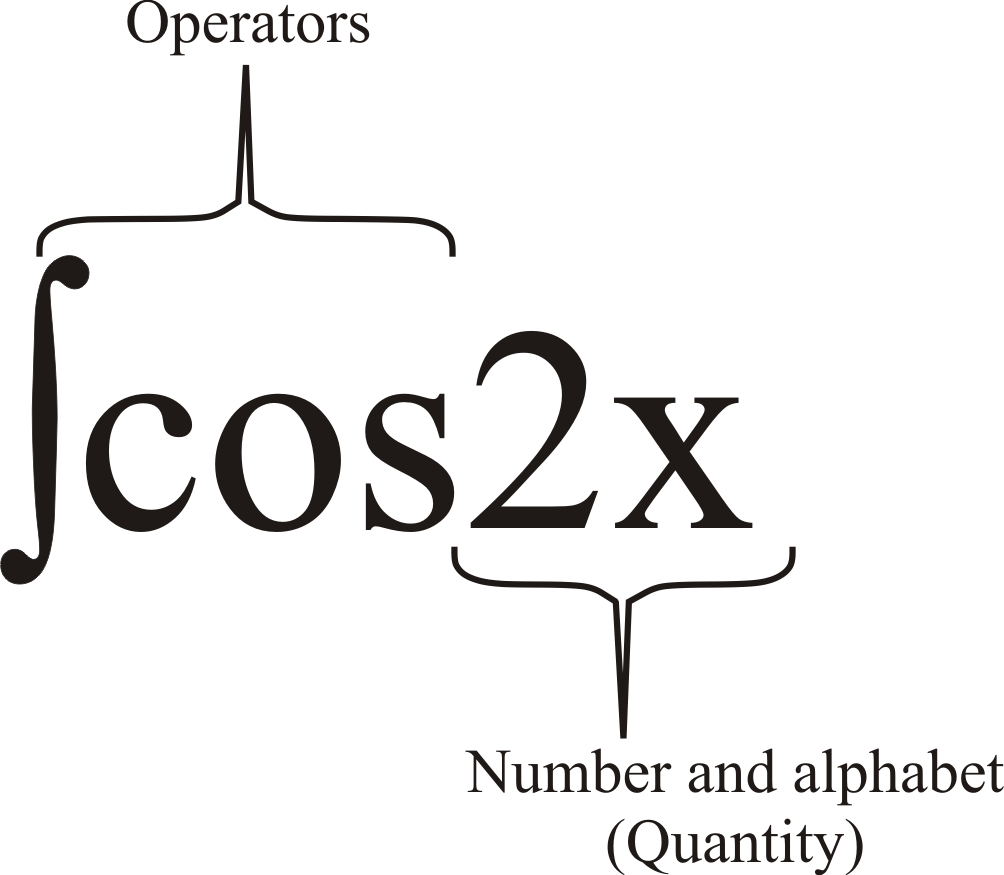 Fig. 3 | From figure 3, you'd notice the sign ∫, which represents the integral operation. Also you would find the cos operation. The characters or symbols representing the quantities is 2x. |
Fig. 1 | |
| From figure 1, you see the operators and the numbers. ? (divide by) and = (equals to) are the operators in the equation. 310 (three hundred and ten), 52 (fifty two), and 5.96 (five point nine six) are the numbers in the equation. The numbers represent the magnitude of the quantities. | |
Fig. 2 | |
| From figure 2, you would see that numbers and alphabets are used. The numbers and alphabets both represent quantities. But different alphabets represent different quantities for example a, c, and x represent different quantities. The operators in this case are + (plus, addition) and = (equals to). | |
Fig. 3 |
|
| From figure 3, you'd notice the sign ∫, which represents the integral operation. Also you would find the cos operation. The collection of characters or symbols representing quantity is 2x. |
The prime reason for why mathematics is needed is to help with new levels of quantification that can't be outrightly measured and recorded. If humans have no need for quantification, they would have no need for mathematics.
As awareness increases or the complexity of systems increases so the need to detail the understanding of natural and man-made systems. More detail means more quantification or measurements. More quantifications or measurements means more mathematics. More mathematics yields more equations and thereby expanding the branches of mathematics, since each of the branches is essentially a collection of equations describing some types of calculations on some types of quantities.
- Quantification involves measuring quantities to determine their magnitude or size.
- Quantification is essential to understand the relationships between quantities and even to model whole systems.
- Every quantity usually has a magnitude and a unit. The magnitude hints its size while its unit hints its kind.
- Mathematics is the practice of performing calculations on quantities so to determine the unknown number or relationship between the quantities.
- The basic form of mathematics is comprised of numbers and operators. Operators represent the calculation style while numbers represent the magnitude of a quantity. Alphabets are also used to represent quantities.
- Quantification is the prime reason for mathematics. Thus, a new need for quantification begs for new styles or levels of calculations.