Foreign Musical Instruments
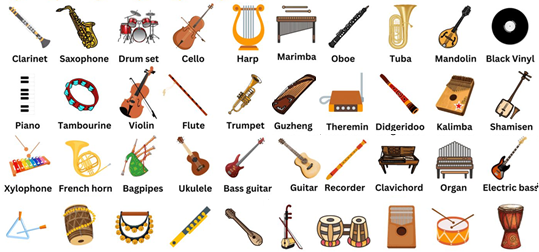
Musical Instruments are tools used to make melodious sounds. Almost anything can be considered a musical instrument. Although, culturally, certain tools have been designed and named specifically for music. Example of musical instruments are shekere, panpipe flute, harp, cello, drums, bassoon, oboe, flute, harmonica, bullroarer, thumb piano, talking drum, viola, cello, guiro, double bass, harp, mandolin piano, xylophones, etc. Music is an aspect of culture, thus the instruments used to make music also vary based on culture.
The concept of foreign musical instruments was invented to contrast between the ubiquitous musical instruments and the less common traditional musical instruments. Essentially, we can say that the foreign musical instruments are global musical instruments as opposed to traditional musical instruments which happens to vary based on culture.
Another hack is that foreign musical instruments are well commercialized and are available in most stores around the world but traditional musical instruments are only available in local markets/stores.
An early classification system for musical instruments is the Greek Hellenistic system (c. 323 - 31 BCE). In this system, musical instruments where classified based on the mechanism of sound creation. Three classes/families were named in this system: enkhorda (stringed), pneumatika (wind), kroustika (percussion). The enkhorda family made sounds from vibrated strings. The pneumatika family made sounds from blown air through them. The kroustika family made sounds from being struck by the hand or a stick.
In the 19th century (1800s), the wind category became too big and was then splitted into woodwinds and brass in a system called the Western Orchestral System. Essentially, in the Western Orchestral Classification there are four (4) families/classes: string, woodwind, brass, and percussion.
In 1914, Erich von Hornbostel and Curt Sachs invented the Hornbostel-Sachs system in their publication Systematik der Musikinstrumente. This system shares the musical instruments into four (4) families: chordophones, aerophones, membranophones, and ideophones. In 1940, Curt Sachs used the term electrophones to describe instruments like Theremin, which then brought the family of musical instruments to five (5).
Brass Instruments are wind instruments that are basically blown without a reed mouthpiece and use changes in air pressure in their valves to produce different musical notes. Essentially, the pitch on the brass instrument is dependent on the pressure of the air blown from the player’s throat into the valves of the instrument. Brass Instrument mustn’t be made from brass to be considered a brass instrument.
Below are some examples:
| Trumpet |  |
| Trombone |  |
| Cornet | 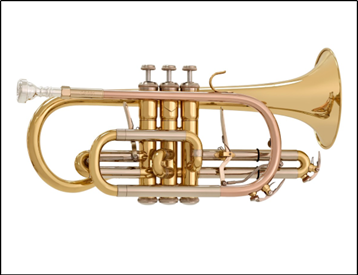 |
| French horn | 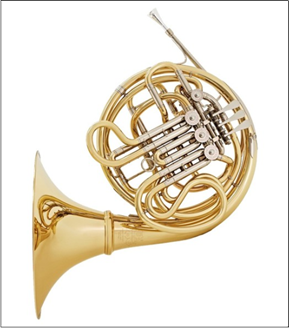 |
| Tuba | 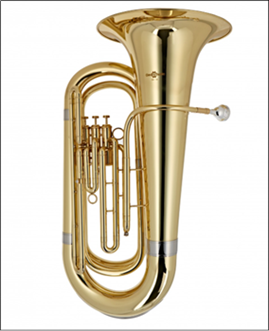 |
| Bulge | 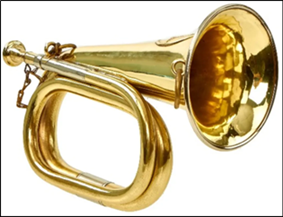 |
Woodwind Instruments are wind instruments that do not have valves, but instead are a column of air. Essentially, the air is blown into a colon with or without a reed. A woodwind instrument mustn’t be made from wood to be called a woodwind instrument.
Below are some examples:
| Recorder | 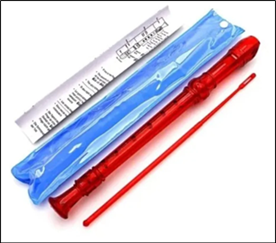 |
| Concert flute |  |
| Piccolo flute | 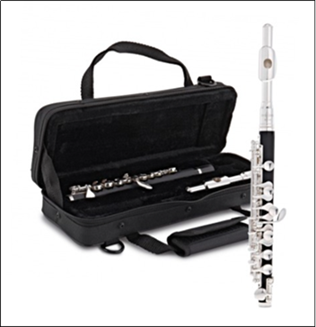 |
| Clarinet |  |
| Alto saxophone |  |
| Soprano saxophone | 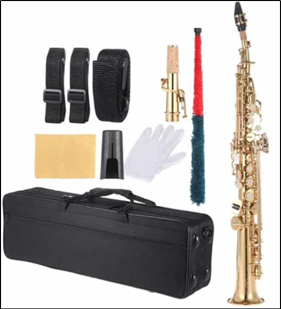 |
String Instruments are instruments that produce sounds from the vibration of strings. The strings could be plucked, bowed, stroked, or strummed to make sounds.
Below are some examples:
| Acoustic guitar |  |
| Electric guitar |  |
| Violin | 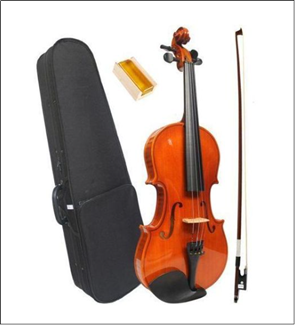 |
Percussion Instruments are instruments that produce sounds from being struck, shaken, scraped or hit together. We can group then in drums (membranophones) and non-drums (idiophones).
Below are some examples:
| Drums |  |
| Tambourine | 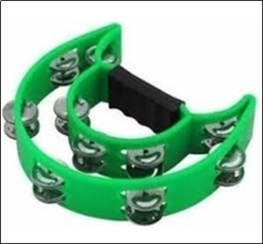 |
| Maracas | 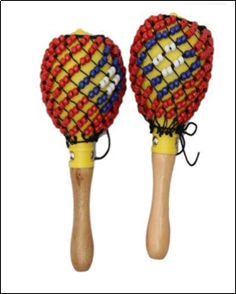 |
| Cymbals |  |
When it comes to playing musical instruments to make music, we can put the instruments into two groups: Rhythm group and Melody group.
The Rhythm group comprise mainly of a class of percussion instruments that are non-pitched, e.g. drums, cymbals, triangles, maracas, shakers, etc. They are used to create the rhythm/beat of the music. They are unable to play musical scales (tonic solfa). Essentially, they are easier to play. When it comes to choosing an instrument for starting to practise to play rhythm, the tambourine and maracas are affordable enough for a start. Click here to see a video on how tambourines are practised to make rhythm.
The Melody group comprise all the instruments that play the tonic solfa (musical scales). While the rhythm group creates the danceable side of the music, the melodic side creates the emotional/feeling side of the music. When it comes to choosing an instrument for starting to practise to play melody, the recorder flute is an absolute best followed by the harmonica. Click here to get started on using the Recorder to play basic melody (tonic solfa).
- The concept of foreign musical instruments was invented to contrast between very popular musical instruments and the less popular traditional musical instruments.
- Musical instruments were classified in the classical times or the Western Orchestral System into four (4) families: string, woodwind, brass and percussion.
- Erich von Hornbostel and Curt Sachs built another system for classifying musical instruments into four (4) families: chordophones, aerophones, membranophones, and idiophones, in 1914.
- Brass instruments are nique wind instruments with valve column(s) and get pitch from the players mouth. A brass instrument mustn't be made from brass to be called a brass instrument. A popular example is trumpet.
- Woodwind instruments are wind instruments that are a column of air. A woodwind instrument mustn't be made from wood to be called woodwind. A popular example is the flute family.
- String instruments produce sounds primarily by means of string vibrations. A popular example is guitar.
- Percussion instruments produce sounds from being struck, shaken, scraped or hit together. A popular example is drums.
- For the purpose of music practice, instruments are grouped into rhythm group and melody group.