The Republic of Ireland: Breaking the Bonds of the British Empire
The Gaels are a branch of the Celts, a vast collection of diverse tribes that once stretched across Europe, sharing similar languages, art styles, and iron-working techniques. Alongside the Gaels were the Gauls, Galatians, Celtiberians, Welsh, Cornish, and Bretons.
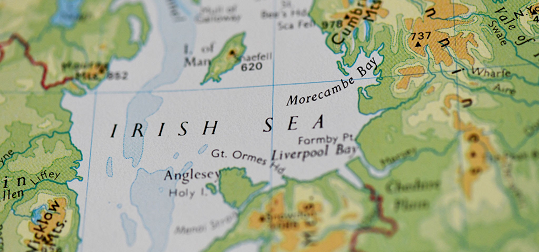
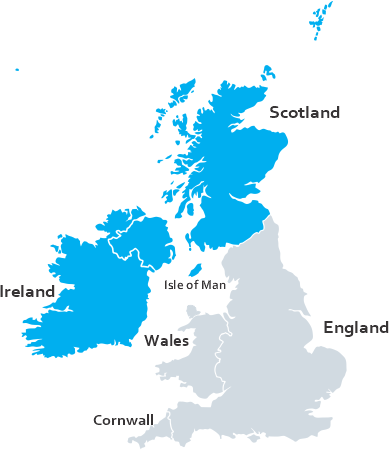
Unlike centralized empires with clear-cut borders, the Gaelic land was a shifting, maritime cultural zone linked together by the Irish Sea. The primary regions occupied by the Gaels evolved over centuries, starting from a single island stronghold and expanding across the water. Originally centered in Ireland (Éire), the Gaelic territory later expanded to include Scotland (Alba) and the Isle of Man (Mannin).
The Anglo-Norman invasion of 1169 marked the beginning of centuries of English involvement in Ireland. Invictors led by Richard de Clare, known as Strongbow, arrived at the invitation of the ousted King of Leinster, Dermot MacMurragh. King Henry II of England soon intervened to assert his own supreme authority over both the Norman knights and native Irish rulers, ultimately establishing the Lordship of Ireland. While the initial conquest succeeded in capturing key eastern ports and establishing the Pale—a fortified region surrounding Dublin—English control gradually waned over the subsequent two centuries. Outside the Pale, many Anglo-Norman families assimilated into Gaelic culture, adopting Irish customs, language, and laws, rendering royal authority largely nominal across most of the island.
This dynamic shifted dramatically in the sixteenth century under the Tudor dynasty. Driven by geopolitical fears that a rebellious Ireland could serve as a launching pad for Catholic foreign powers like Spain, Henry VIII declared himself King of Ireland in 1541. This marked a transition from indirect lordship to direct reconquest. Successive Tudor monarchs, most notably Elizabeth I, enforced English rule through aggressive military campaigns and legal centralization. They introduced the policy of plantation, confiscating land from native Gaelic and Old English lords and granting it to Protestant settlers from England and Scotland. The brutal Nine Years' War (1594–1603) culminated in the defeat of the Gaelic chieftains at Kinsale and the 1607 Flight of the Earls, effectively dismantling the ancient Gaelic political order and establishing firm English sovereignty over the entire island.
The shadow of the English Civil War stretched far beyond the borders of Britain, casting a long and tragic wake across the Irish landscape. As political and religious strife tore England apart, the conflict inevitably spilled into Ireland, intertwining local struggles with the grand battle between King and Parliament. In 1641, local leaders staged an uprising to reclaim land and defend Catholic rights, creating a volatile third front in the broader war. Royalist and Parliamentarian interests fought ruthlessly over control of the island, turning local towns and countryside into battlegrounds for foreign rivalries.
The arrival of Oliver Cromwell and the New Model Army in 1649 marked the most devastating chapter of the era. Determined to crush Royalist resistance and secure complete authority over the territory, Parliamentary forces launched a brutal campaign characterized by notorious sieges at Drogheda and Wexford. The widespread devastation ruined local economies, displaced communities, and reshaped the social fabric of the island for generations to come.
When the conflict finally drew to a close with the defeat of Royalist elements in 1651, the geopolitical landscape was altered dramatically. The Parliamentarian victory led to sweeping land confiscations through the Act for the Settlement of Ireland, transferring vast estates to English soldiers and creditors. While the central clash focused on the balance of power between king and parliament in London, the enduring legacy on Irish soil was one of severe displacement, religious division, and deep historical scars that lingered long after the Restoration.
The Act of Union 1800 was a monumental piece of legislation that fundamentally reshaped the political landscape of the British Isles by officially merging the Kingdom of Great Britain and the Kingdom of Ireland into the United Kingdom of Great Britain and Ireland on January 1, 1801. Following the bloody 1798 Irish Rebellion led by the United Irishmen, the British government under Prime Minister William Pitt the Younger viewed an independent Irish legislature as a grave national security risk. London feared that an unstable Ireland offered a convenient entry point for French forces during the ongoing French Revolutionary Wars. To permanently neutralize this strategic vulnerability, Pitt sought to integrate Ireland directly under the rule of the Parliament at Westminster.
To achieve this unification, the British government had to persuade the Irish Parliament in Dublin to vote itself out of existence. Because the Irish legislature was controlled entirely by the Protestant Ascendancy—a wealthy Anglican minority reluctant to surrender their power—the British administration secured passage of the matching acts through extensive political bribery, handing out noble titles, government offices, pensions, and direct cash compensation to Irish landowners. Under the terms of the Union, the Dublin Parliament was dissolved, and Ireland was granted 100 seats in the House of Commons and 32 seats in the House of Lords in London. The act also merged the Anglican Churches of England and Ireland into a single state institution and created a unified free-trade area between the two islands.
Despite its formal adoption, the Act of Union created deep historical grievances because of a major broken promise. Pitt had initially assured Irish Catholic leaders that Catholic Emancipation—granting the Catholic majority the right to sit in Parliament and hold public office—would accompany the Union. However, King George III firmly vetoed the emancipation measure, claiming it violated his coronation oath to defend the Protestant faith, which prompted Pitt's resignation and left Irish Catholics without political representation for nearly three more decades. This betrayal turned the Act of Union into a symbol of foreign oppression, fueling nationalist resistance, Daniel O'Connell’s repeal campaigns, and the struggle for Irish self-determination throughout the nineteenth and early twentieth centuries.
The Great Famine, or *An Gorta Mór*, was a catastrophic period of starvation and social crisis in Ireland between 1845 and 1852. The disaster was triggered by *Phytophthora infestans*, a water mold commonly known as potato blight, which unexpectedly destroyed the primary food source for over half the population. Because rural tenant farmers relied almost exclusively on a single high-yielding variety of potato to survive, the sudden loss of successive harvests plunged millions of impoverished families into immediate and absolute ruin.
The tragic severity of the famine was intensified by the rigid political and economic structures of the era. Under British administrative control, large quantities of grain, livestock, and other agricultural products continued to be exported from Irish ports to overseas markets throughout the crisis. Furthermore, the British government’s reliance on strict free-market economic policies led to delayed, inadequate, and harsh relief measures, such as forcing desperate individuals to undertake grueling work on public works schemes or enter overcrowded, disease-ridden workhouses to qualify for basic food rations.
The human toll of the Great Famine permanently altered Ireland's demographic and cultural identity. Approximately one million people died from starvation and widespread diseases such as typhus and cholera, while another million fled the country on notoriously overcrowded "coffin ships" bound for North America and Britain. This massive wave of emigration shrank the Irish population by roughly twenty-five percent and accelerated the decline of the native Irish language. Ultimately, the devastation fueled lasting resentment toward British rule, serving as a powerful catalyst for the modern Irish nationalist and home rule movements.
The journey toward modern Irish statehood was defined by armed rebellion, political division, and decades of sectarian conflict. On Easter Monday in 1916, Irish republicans launched the Easter Rising in Dublin, proclaiming an independent Irish Republic from the General Post Office. Although British forces swiftly suppressed the six-day insurrection, the execution of its leaders transformed public opinion, turning executed rebels into martyrs and fueling widespread support for the independence movement led by Sinn Féin.
This shift ignited the Irish War of Independence (1919–1921), a guerrilla conflict between the Irish Republican Army (IRA) and British security forces. The war ended with the Anglo-Irish Treaty of 1921, which established the Irish Free State as a self-governing dominion, but partitioned the island by keeping six northeastern counties within the United Kingdom as Northern Ireland. Disagreement over the treaty’s terms and the oath of allegiance to the British Crown sparked the bitter Irish Civil War (1922–1923), in which pro-treaty forces prevailed. The southern state eventually severed all formal constitutional ties with Britain, officially declaring itself the Republic of Ireland in 1949.
Meanwhile, Northern Ireland remained deeply divided between a predominantly Protestant Unionist majority who favored remaining in the UK and a Catholic Nationalist minority who sought a united Ireland. By the late 1960s, civil rights campaigns protesting systemic discrimination against Catholics escalated into "The Troubles"—a violent three-decade conflict involving republican paramilitaries like the Provisional IRA, loyalist paramilitaries, and British military forces. Characterized by bombings, assassinations, and heavy militarization, the period resulted in over 3,500 deaths. The conflict officially reached a historic peace settlement with the signing of the Good Friday Agreement in 1998, establishing power-sharing governance in Northern Ireland and cross-border cooperation.
In the decades following the 1998 Good Friday Agreement, modern Ireland has transformed into a progressive, prosperous, and globally connected nation. Evolving from a traditionally agricultural and socially conservative society, the Republic of Ireland experienced rapid economic expansion known as the "Celtic Tiger," establishing itself as a premier European hub for global technology, finance, and pharmaceutical industries. This economic integration within the European Union has elevated living standards and attracted a diverse, international population, reshaping the island's cultural landscape.
Parallel to its economic development, Ireland underwent a profound social revolution. Through landmark constitutional referendums, the country legalized marriage equality in 2015 and repealed constitutional restrictions on abortion in 2018, signaling a decisive shift toward secularism and modern liberal values. Meanwhile, relations with Northern Ireland have continued to evolve through power-sharing institutions, open cross-border commerce, and ongoing diplomatic engagement, even as new political and economic dynamics arise in the post-Brexit era.
Today, Ireland balances its rich heritage, native language preservation, and traditional arts with a contemporary identity defined by innovation and global influence. Despite facing modern challenges such as severe housing shortages, rising living costs, and the complexities of immigration, both the Republic and Northern Ireland remain dedicated to maintaining peace, fostering European cooperation, and advancing a dynamic, forward-looking society.
Historically a nation defined by emigration, Ireland underwent a remarkable demographic shift during the late 1990s as economic expansion transformed it into a major destination for international migrants. The rapid rise of the "Celtic Tiger" economy created widespread employment opportunities, drawing thousands of returning Irish expatriates alongside foreign workers seeking economic prosperity. This inward movement accelerated significantly following the 2004 expansion of the European Union, which allowed citizens from Central and Eastern European nations—particularly Poland, Lithuania, and Latvia—to live and work freely in Ireland. Over time, these migration flows enriched the country's labor market, bolstered essential public services, and significantly diversified the social and cultural fabric of Irish towns and cities.
In recent decades, Ireland's immigration profile has grown increasingly global, attracting highly skilled professionals from non-EU countries in sectors such as technology, healthcare, and finance. The presence of multinational corporations, coupled with world-class educational institutions, continues to draw international students, engineers, and medical staff. Concurrently, the nation has experienced a notable increase in individuals seeking international protection from conflict and persecution worldwide, reflecting broader global humanitarian trends and tested international obligations.
This rapid demographic transition has introduced significant social, political, and economic challenges for modern Ireland. The sustained inflow of new residents has placed immense pressure on public infrastructure, most acutely felt within an ongoing national housing crisis, alongside strain on public transport and healthcare networks. These resource constraints have sparked political debates over border management, asylum processing efficiency, and integration policies, giving rise to social tensions and occasional anti-immigration protests. Despite these complex policy hurdles, immigration remains a vital pillar of Ireland's economic sustainability and international identity, reshaping the island into a modern, multicultural society.
Migrating to Ireland generally depends on your nationality, qualifications, and purpose for moving. For citizens of the European Union, the European Economic Area, and the United Kingdom, moving to Ireland is straightforward due to free movement rights, allowing individuals to live, work, or study without needing a visa or employment permit. However, for non-EEA nationals, relocation requires securing an official visa or legal status through established pathways such as employment, higher education, family reunification, or business investment.
The most common route for non-EEA professionals is obtaining an employment permit, managed by Ireland's Department of Enterprise, Trade and Employment. The Critical Skills Employment Permit is the most sought-after option, designed to attract highly skilled workers in shortage areas like information technology, engineering, healthcare, finance, and nursing. To qualify, an applicant generally needs a job offer from an Irish employer meeting a specific minimum annual salary threshold. Alternatively, a General Employment Permit covers a broader range of occupations, though it requires the employer to complete a Labor Market Needs Test to prove no suitable Irish or EU candidate was available for the role.
Another popular entry point is through international education. Enrolling in a full-time degree program at an accredited Irish university or college allows non-EEA students to work part-time during term time and full-time during official holiday periods. Upon graduation, eligible students can access the Stamp 1G Third Level Graduate Scheme, which grants a temporary stay-back permit—typically one to two years—to work full-time or seek employment that qualifies for a long-term critical skills permit.
Other avenues include family reunification permits for dependents of Irish citizens or legal residents, as well as retirement and independent wealth visas for self-sufficient individuals. Regardless of the route chosen, all non-EEA nationals intending to stay in Ireland for more than 90 days must register with the immigration authority (ISD) upon arrival to obtain their Irish Residence Permit (IRP) card and maintain continuous legal status while working toward long-term residency or citizenship.
- The Gaels are a branch of the diverse Celtic tribes that once spanned across Europe sharing similar languages, art styles, and iron-working techniques. Originally centered in Ireland (Eire), the shifting cultural maritime zone of the Gaelic land expanded over centuries to include Scotland (Alba) and the Isle of Man (Mannin).
- The Anglo-Norman Invasion and Tudor Expansion: The 1169 Anglo-Norman invasion led by Richard de Clare (Strongbow) established English involvement, which eventually saw Henry VIII declare himself King of Ireland in 1541 to secure direct control. Tudor monarchs enforced rule through military campaigns, land plantations, and legal centralization, culminating in the 1607 Flight of the Earls that dismantled the ancient Gaelic political order.
- Local uprisings in 1641 turned Ireland into a volatile third front in the broader war between King and Parliament. Oliver Cromwell’s 1649 campaign with the New Model Army brought devastating sieges at Drogheda and Wexford, which ruined local economies, displaced communities, and resulted in sweeping land confiscations via the Act for the Settlement of Ireland.
- The Act of Union 1800 officially merged Great Britain and Ireland on January 1, 1801, following the 1798 Irish Rebellion, to neutralize strategic vulnerabilities during the French Revolutionary Wars. Secured largely through political bribery of the Protestant Ascendancy, the union dissolved the Dublin Parliament and merged the churches, but King George III's veto of Catholic Emancipation left lasting historical grievances and fueled nationalist resistance.
- Between 1845 and 1852, the water mold Phytophthora infestans destroyed potato crops, causing a catastrophic famine that devastated a population heavily reliant on a single food source. The crisis was heavily worsened by ongoing agricultural exports and rigid free-market policies, resulting in approximately one million deaths, another million emigrating on "coffin ships," and a permanent shift in Ireland's demographics.
- The 1916 Easter Rising and subsequent Irish War of Independence led to the 1921 Anglo-Irish Treaty, partitioning the island and creating the Irish Free State alongside Northern Ireland. Decades later, systemic discrimination against Catholics in Northern Ireland triggered "The Troubles" from the late 1960s onward, which was ultimately brought to a historic peace settlement by the 1998 Good Friday Agreement.
- Following the Good Friday Agreement, the Republic of Ireland experienced rapid economic expansion known as the "Celtic Tiger," turning the nation into a major global hub for technology, finance, and pharmaceuticals. The country also underwent a profound social revolution, legalizing marriage equality in 2015 and repealing abortion restrictions in 2018, reflecting a shift toward secularism and modern liberal values.
- Driven by the "Celtic Tiger" and EU expansions, Ireland transitioned from a nation of emigration into a multicultural destination for returning expats, European workers, and global professionals in tech, healthcare, and finance. While this influx has boosted the labor market, it has introduced significant infrastructure pressures—particularly an ongoing housing crisis—while non-EEA nationals continue to navigate pathways like employment permits, study schemes, and family reunification.