The Government of the Federal Republic of Nigeria
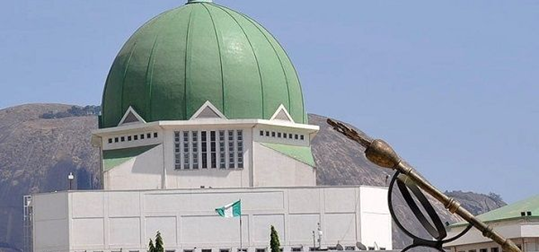
- The Federal Republic of Nigeria and Nigeria
- The Legislature: National Assembly
- The Legislature: Houses of Assembly
- The Legislature: Local Government Councils
- The Executive: Federal Executive
- The Executive: State Executive
- The Executive: LGA Chairman
- The Judicature: Federal Courts
- The Judicature: State Courts
- The Judicature: Magistrate Courts, Customary Courts and Sharia Courts
- The Case of Bad Governance
The Federal Republic of Nigeria refers to the entire structure called Nigeria, including the federal entity and all its state entities, but Nigeria refers just to the federal entity, not necessarily including the state entities. It refers to the geographical land area between latitudes 4°N and 14°N and longitudes 2°E and 15°E.
The term "Federal Republic of Nigeria" was born in 1960 even though the term Nigeria had been in existence much longer before 1960. In 1999, the Federal Republic of Nigeria (FRN) commenced the fourth republic with 36 states and a Federal Capital Territory, Abuja.
The Government of the Federal Republic of Nigeria exists in three levels: the federal level, the state level and the local government level. Prior to 2024, the local government system of Nigeria was less autonomous and required the State Government in her affairs. With the below table we can see the matrix representing the Government of the FRN.
| Federal | State | LGA | |
| Legislature | National Assembly (Senate and House of Representatives) | State House of Assembly | Legislative Council (Councillors) |
| Executive | President, Federal Ministries, and Federal Public Services | Governor, State Commissions, State Public Services | LGA Chairman |
| Judiciary | Supreme Court, Court of Appeal, Federal High Court | State High Court, Sharia/Customary Court of Appeal | Magistrate Courts, Customary Courts |
The National Assembly of the Federal Republic of Nigeria is established as the nation's supreme legislative authority, vested with the power to make laws for the peace, order, and good government of the Federation (Section 4(1)). As a bicameral legislature, it consists of two distinct chambers: the Senate and the House of Representatives (Section 4(2)). Together, these bodies exercise critical democratic functions, including the authorization of public expenditure through the passage of the annual Appropriation Bill (Section 81) and the oversight of federal ministries, departments, and agencies to expose corruption and inefficiency (Section 88).
The upper chamber, the Senate, is structured to ensure equal representation among the states of the Federation. It consists of three Senators from each of the 36 states and one Senator representing the Federal Capital Territory, Abuja, bringing the total membership to 109 (Section 48). The Senate is presided over by the President of the Senate, who is elected by the members of the chamber from among themselves during their inaugural sitting (Section 50(1)(a)). The Senate possesses specific constitutional powers, including the exclusive authority to confirm key executive appointments made by the President, such as ministers, ambassadors, and judicial officers.
The lower chamber, the House of Representatives, is designed to reflect proportional representation based on national population distribution. It comprises 360 members, each representing a distinct federal constituency established across the various states and the Federal Capital Territory (Section 49). The chamber is led by the Speaker of the House of Representatives, who is similarly elected by the members from within their own ranks at the commencement of the legislative term (Section 50(1)(b)). While both chambers must pass a bill in identical form for it to become law, the House of Representatives works closely with the Senate on joint committees, particularly when reconciling differences on financial and national budget bills (Section 62).
The House of Assembly of a State is the unicameral legislative arm of government established for each of the 36 states within the Nigerian federation, vested with the constitutional power to make laws for the peace, order, and good government of that specific state (Section 4(7)). Operating independently of the federal National Assembly, a State House of Assembly has the authority to legislate on matters contained in the Concurrent Legislative List and any residual matters not explicitly reserved for the federal government (Section 4(7)(a)-(c)). Mirroring the federal oversight functions at the state level, the House is constitutionally empowered to control public funds, approve the state's annual budget presented by the Governor (Section 121), and conduct investigations into the administration of state ministries, departments, and local government councils to ensure accountability and eliminate waste (Section 128).
In terms of structure and composition, a State House of Assembly must consist of a minimum of 24 and a maximum of 40 members, with the exact number of seats determined by the Independent National Electoral Commission based on the population and geographical federal constituencies within that state (Section 91). Members are elected for a four-year term from various state constituencies (Section 104). The legislative body is led by the Speaker of the House of Assembly, who, along with the Deputy Speaker, is elected by the lawmakers from among themselves during the inaugural sitting of the house (Section 92(1)).
For a bill passed by the House of Assembly to officially become law within the state, it must be presented to the State Governor for assent (Section 100(1)). If the Governor signs the bill, it becomes an Law of the State; however, if the Governor withholds assent, the House of Assembly can exercise its constitutional checks and balances by overriding the veto with a two-thirds majority vote, thereby passing the bill into law without the Governor's signature (Section 100(5)). Furthermore, the House of Assembly holds the critical and sole constitutional power to initiate and execute impeachment proceedings against a sitting Governor or Deputy Governor in the event of gross misconduct (Section 188).
The system of local government by democratically elected local government councils is constitutionally guaranteed across the 36 states of the Federation, ensuring that governance is brought closest to the grassroots level (Section 7(1)). Every state government is mandated to ensure the existence of these councils under a law which provides for their establishment, structure, composition, finance, and functions (Section 7(1)). The constitution explicitly defines the geographical boundaries of the 774 local government areas in Nigeria (Section 3(2) and Part I of the First Schedule). While the State House of Assembly enacts the statutory framework governing them, the local government council operates as a distinct tier of administration, empowered to manage local affairs, collect specific rates, and collaborate with state authorities on regional development (Section 7(3)).
The administration of a local government council is divided into executive and legislative arms to maintain checks and balances at the grassroots level. The executive arm is led by the Executive Chairman, who is elected alongside a Vice-Chairman by the registered voters of the local government area for a term typically specified by state law. The legislative arm consists of Councillors elected from various wards within the local government area, forming the leader council which debates and passes local bylaws. This structure ensures that both the executive leadership and the lawmakers are directly accountable to their immediate communities (Section 7(1)).
The constitutional functions of a local government council are clearly delineated to focus on community development, public health, and local economic regulation (Fourth Schedule). These core responsibilities include the collection of rates, radio and television licenses, and vehicle licenses, as well as the establishment and maintenance of cemeteries, burial grounds, and homes for the destitute (Fourth Schedule, Section 1). Furthermore, local government councils are constitutionally mandated to provide and maintain public conveniences, refuse disposal, and local roads, streets, and public parks (Fourth Schedule, Section 1). They also play a pivotal role in economic development by establishing, maintaining, and regulating markets, motor parks, and slaughterhouses (Fourth Schedule, Section 1).
In addition to their independent duties, local government councils participate in broader state-wide development and social services in collaboration with state government agencies (Section 7(5)). The constitution specifies that councils must participate in the provision and maintenance of primary, adult, and vocational education, as well as the development of agriculture and natural resources, other than the exploitation of minerals (Fourth Schedule, Section 2). They are also tasked with the promotion and maintenance of local health services, including primary healthcare delivery (Fourth Schedule, Section 2). To fund these extensive responsibilities, the constitution commands the National Assembly to allocate revenue to local government councils from the Federation Account, while State Houses of Assembly must ensure a statutory allocation of state revenues is also forwarded to them (Section 162(6)-(8)).
The executive powers of the Federation are vested in the President, who may exercise them either directly or through the Vice-President, Ministers of the Government of the Federation, or other officers in the public service of the Federation (Section 5(1)(a)). This power extends to the execution and maintenance of the Constitution, all laws made by the National Assembly, and all matters over which the National Assembly has power to make laws (Section 5(1)(b)). The President serves as the Head of State, the Chief Executive of the Federation, and the Commander-in-Chief of the Armed Forces of the Federation (Section 130). To safeguard national security and territorial integrity, the President is empowered to deploy the armed forces, though the operational deployment of troops for combat outside Nigeria requires the prior consent of the Senate (Section 5(4)(a)).
The office of the President is filled through a national democratic election, where a candidate must secure not only a majority of the total votes cast but also not less than one-quarter of the votes cast in each of at least two-thirds of all the States in the Federation and the Federal Capital Territory, Abuja (Section 134(2)). The President and Vice-President are elected concurrently for a four-year term, with a strict constitutional limit of two terms in office (Section 135 and Section 137(1)(b)). In the event of a vacancy in the office of the President due to death, resignation, impeachment, or permanent incapacity, the Vice-President automatically assumes the office for the remainder of the term (Section 146(1)).
The President is assisted in governance by the Federal Executive Council, which includes the Vice-President and Ministers appointed by the President subject to confirmation by the Senate (Section 147(2)). To ensure national unity and inclusivity, the President must appoint at least one Minister from each State of the Federation, complying with the federal character principle (Section 147(3)). If a member of the National Assembly is appointed as a Minister, that person must resign their legislative seat before taking the oath of office (Section 147(4)). The President holds regular meetings with the Vice-President and Ministers to determine general federal policies, coordinate administrative activities, and advise on executive responsibilities (Section 148).
Furthermore, the Constitution establishes several permanent Federal Executive Bodies to advise the President and manage key sectors of national administration (Section 153(1)). These critical institutions include the Council of State, the Federal Civil Service Commission, the Independent National Electoral Commission, the National Defence Council, the National Security Council, and the Federal Character Commission (Section 153(1)). These bodies play an essential role in stabilizing national institutions, maintaining security, ensuring equitable distribution of resources, and preserving the integrity of federal operations independent of standard political transitions.
The executive powers of a State within the Nigerian federation are vested in the Governor of that State, who may exercise these powers either directly or through the Deputy Governor, Commissioners of the Government of the State, or other officers in the public service of the State (Section 5(2)(a)). This authority extends to the execution and maintenance of the State's constitution, all laws enacted by the State House of Assembly, and all matters over which the House of Assembly has the power to make laws (Section 5(2)(b)). The Governor serves as the Chief Executive of the State, representing its highest administrative and political authority, though these powers must be exercised in a manner that does not impede or prejudice the exercise of the executive powers of the Federation (Section 5(3)).
To be elected to the office of Governor, a candidate must be a citizen of Nigeria by birth, have attained the age of thirty-five years, be a member of a political party, and be sponsored by that party (Section 177). A gubernatorial candidate is deemed duly elected only if they secure the highest number of votes cast at the election, and not less than one-quarter of all the total votes cast in each of at least two-thirds of all the local government areas in the State (Section 179(2)). The Governor and Deputy Governor run on a joint ticket and are elected for a four-year term, subject to a maximum limit of two terms in office (Section 180 and Section 182(1)(b)). In the event of a vacancy in the office due to death, resignation, impeachment, or permanent incapacity, the Deputy Governor automatically succeeds to the office of Governor (Section 191(1)).
The Governor is assisted in the administration of the state by the State Executive Council, which functions as the cabinet at the sub-national level. This council comprises the Deputy Governor and State Commissioners, who are appointed by the Governor subject to confirmation by the State House of Assembly (Section 192(2)). In making these appointments, the Governor is constitutionally mandated to conform to the diversity and cultural balance of the state, ensuring that the composition of the cabinet reflects the federal character and fairness among the various local communities (Section 14(4)). The Governor holds regular meetings with the State Executive Council to determine general state policies, coordinate the activities of ministries and departments, and advise on executive responsibilities (Section 193).
Additionally, the Constitution establishes specific State Executive Bodies to advise the Governor and manage critical administrative sectors independent of regular political changes (Section 197(1)). These permanent institutions consist of the State Civil Service Commission, the State Independent Electoral Commission, and the State Judicial Service Commission (Section 197(1)). The State Independent Electoral Commission holds the vital responsibility of organizing, undertaking, and supervising all elections to local government councils within the state (Part II of the Third Schedule), ensuring the democratic continuity of the grassroots tier of government.
The Executive Chairman serves as the political and administrative head of a Local Government Council, exercising the executive powers of the local government tier as provided under the statutory framework enacted by the State House of Assembly (Section 7(1)). While the Constitution guarantees the system of democratically elected local government councils, it delegates the specific details regarding the tenure, structure, and precise executive powers of the Chairman to state legislation (Section 7(1)). The Chairman is responsible for the day-to-day administration of the Local Government Area, directing the execution of local projects, managing municipal personnel, and presenting the annual financial estimates and budget proposals to the legislative arm of the council for approval (Section 7(3)).
To be eligible to contest for the office of Local Government Chairman, a candidate must be a citizen of Nigeria, have attained the age prescribed by the respective State Electoral Law, and be sponsored by a registered political party. The Chairman is elected directly by the registered voters within the Local Government Area through a universal adult suffrage election conducted by the State Independent Electoral Commission (Part II of the Third Schedule). To ensure regular governance and direct executive support, a Vice-Chairman is elected concurrently on a joint ticket with the Chairman, automatically assuming the executive seat in the event of the Chairman’s death, resignation, removal, or permanent incapacity.
The Chairman operates through a local cabinet, typically referred to as the Local Government Executive Committee, which includes the Vice-Chairman and appointed Supervisory Councillors who oversee specific portfolios such as health, agriculture, and education. The Chairman holds regular meetings with this committee to coordinate the implementation of core municipal duties, which include the collection of local rates, the maintenance of markets, motor parks, public conveniences, and the management of refuse disposal (Fourth Schedule, Section 1). Furthermore, the Chairman plays a critical diplomatic and administrative role by representing the local government at the State Joint Local Government Account Allocation Committee, ensuring the council receives its statutory allocations from both the Federation Account and state revenues (Section 162(6)-(8)).
The judicial powers of the Federal Republic of Nigeria are vested in the courts established for the Federation, which serve as the ultimate arbiters of law and the protectors of fundamental rights (Section 6(1)). These superior courts of record hold the constitutional authority to adjudicate disputes between persons, or between government authorities and any person, extending to all matters concerning the determination of civil rights and obligations (Section 6(6)(b)). At the federal tier, Chapter VII of the Constitution establishes a hierarchical structure of specialized and appellate courts, ensuring that federal laws, constitutional interpretations, revenue matters, and labor disputes are determined by independent judicial bodies whose appointments and funding are strictly insulated from direct political control.
The Supreme Court of Nigeria stands at the absolute apex of the judicial hierarchy, established as the final court of terminal appeal with no further recourse to any other body (Section 230(1)). The court consists of the Chief Justice of Nigeria and a maximum of twenty-one Justices of the Supreme Court, as prescribed by an Act of the National Assembly (Section 230(2)). While predominantly an appellate court handling matters coming from the Court of Appeal (Section 233), the Supreme Court exercises exclusive original jurisdiction in specific high-level constitutional conflicts, namely disputes between the Federation and a State, or between States themselves, where a legal right or question of law is at stake (Section 232(1)).
Directly below the apex court is the 5 Court of Appeal, which functions as a nationwide appellate bench divided into multiple judicial divisions to handle regional appeals (Section 237(1)). Led by the President of the Court of Appeal, the court must include at least three justices who are learned in Islamic personal law and at least three learned in Customary law to effectively resolve diverse legal questions (Section 237(2)(b)). In addition to its broad appellate jurisdiction over all lower federal and state superior courts, the Court of Appeal holds exclusive original jurisdiction to hear and determine petitions regarding whether any person has been validly elected to the office of President or Vice-President, or whether their term of office has ceased (Section 239(1)).
At the trial level, the Federal High Court serves as the primary court of original jurisdiction for matters specifically tied to federal revenue, maritime operations, and executive administration (Section 249(1)). Presided over by the Chief Judge of the Federal High Court, this court holds exclusive civil jurisdiction over cases involving the revenue of the Federal Government, federal taxation, customs and excise duties, banking, copyright, patents, and admiralty matters (Section 251(1)). It also possesses the sole authority to handle actions seeking declarations or injunctions that challenge the operation, administration, or management of any federal ministry, department, or agency (Section 251(1)(r)).
Operating on the same hierarchical tier as the Federal High Court are specialized federal courts designed to address distinct legal domains across the federation. The National Industrial Court holds exclusive jurisdiction over labor relations, trade disputes, industrial accidents, and matters arising from the Employees' Compensation Act (Section 254C). For specialized appeals originating from regional lower registries, the Constitution provides for the Court of Appeal to hear matters from the Sharia Court of Appeal of the Federal Capital Territory regarding Islamic personal law (Section 260) and the Customary Court of Appeal of the Federal Capital Territory regarding customary civil law (Section 265). All these judicial institutions rely on the National Judicial Council for appointments and disciplinary recommendations (Section 153(1)(i)), ensuring uniformity and independence across the federal bench.
The judicial powers of a State within the Nigerian federation are vested in the courts established specifically for that State, ensuring the localized administration of justice and the resolution of legal disputes within its borders (Section 6(2)). These superior courts of record operate independently of the federal bench in their daily operations, yet they remain bound by the constitutional interpretations of the federal appellate courts. Under Chapter VII, Part II of the Constitution, each state maintains a hierarchical judicial system comprising trial courts of general and specialized jurisdiction, as well as specialized appellate tribunals designed to accommodate regional legal traditions, all overseen by the regulatory umbrella of the National Judicial Council (Section 153(1)(i)).
The High Court of a State stands as the highest judicial body and the primary court of unlimited original jurisdiction within that specific state (Section 270(1)). Presided over by the Chief Judge of the State, the High Court is constitutionally empowered to hear and determine any civil or criminal proceedings under any law of the State, as well as specific federal laws as permitted by the National Assembly (Section 272(1)). Beyond its vast trial jurisdiction, the State High Court possesses unique constitutional authority to hear applications regarding the enforcement of fundamental human rights within its territory (Section 46(1)) and functions as an appellate body for decisions coming from lower magistrates' courts and native tribunals.
For states that choose to integrate Islamic jurisprudence into their legal frameworks, the Constitution establishes the Sharia Court of Appeal of a State (Section 275(1)). Led by a Grand Kadi, this specialized appellate court exercises supervisory and appellate jurisdiction specifically over civil proceedings involving Islamic personal law (Section 277(1)). The court handles sensitive matters such as Islamic marriages, their dissolution, custody disputes, guardianship of infants, and the distribution of estates where all participating parties are Muslims or have voluntarily consented to the jurisdiction of the Sharia system (Section 277(2)).
Similarly, to preserve and adjudicate regional traditions, any state may establish a Customary Court of Appeal of a State to handle matters of customary law (Section 280(1)). Presided over by a President of the Customary Court of Appeal, this bench exercises exclusive appellate and supervisory jurisdiction in civil proceedings involving questions of customary law (Section 282(1)). It serves as the final authority within the state for reviewing decisions from lower customary courts regarding land tenure under native law, traditional marriages, inheritance, and chieftaincy matters, ensuring that local customs are interpreted by judges learned in those specific traditions (Section 282(2)).
Below these superior courts of record sit the lower state courts, which handle the vast majority of grassroots litigation but are not explicitly detailed in the text of the Constitution itself. These include Magistrates' Courts, which handle minor civil claims and criminal offenses under the state penal codes, and customary or area courts at the local government level. To maintain judicial independence and insulate state judiciaries from local political interference, the appointment of judges to all superior state courts requires the recommendation of the National Judicial Council, subject to confirmation by the State House of Assembly (Section 271(1), Section 276(1), and Section 281(1)).
The lower courts of a State—comprising Magistrate Courts, Customary Courts, and Sharia Courts—constitute the grassroots tier of the Nigerian judiciary. While Chapter VII of the Constitution explicitly establishes the superior courts of record, it gives State Houses of Assembly the power to establish lower courts through state legislation to ensure justice is accessible to local communities (Section 6(4)(a) and Section 6(5)(j)-(k)). These courts handle the vast majority of day-to-day legal disputes, acting as the primary point of contact between citizens and the judicial system.
Magistrate Courts operate as courts of summary jurisdiction handling both civil and criminal matters as prescribed by the Magistrates' Courts Law of each respective state. Presided over by legally qualified Magistrates, their jurisdiction is strictly capped by financial limits for civil claims and maximum sentencing guidelines for criminal offenses. They handle everyday matters such as landlord-tenant disputes, debt recovery, and minor criminal prosecutions like theft and assault. Because they lack constitutional status as superior courts, appeals from a Magistrate Court lie directly to the High Court of the State.
Customary Courts (often called Area Courts in parts of Northern Nigeria) are established to administer the native laws and customs of the local community, provided those customs are not repugnant to natural justice, equity, and good conscience, nor incompatible with any existing written law. These courts are typically presided over by traditional rulers or individuals well-versed in local traditions who may not necessarily be formal lawyers. They hold jurisdiction over customary marriages, family custody, and land disputes under native land tenure systems. Appeals from these courts flow upwards to the Customary Court of Appeal of the State (Section 282).
Sharia Courts are specialized lower courts operating primarily in Northern and parts of Western Nigeria, established to adjudicate civil disputes among Muslims in accordance with Islamic jurisprudence (Fiqh). These courts are presided over by Kadis or Alkali judges who possess formal training in Islamic law. Their jurisdiction covers Islamic personal law, including Islamic marriages (Nikah), divorce, guardianship of infants, and the distribution of estates (Mirath), provided all parties involved are Muslims or have voluntarily consented in writing to the court's jurisdiction. Decisions from these lower registries are appealed to the Sharia Court of Appeal of the State (Section 277).
The case of bad governance in Nigeria represents a severe departure from the foundational objectives explicitly established in Section 14(2)(b) of the 1999 Constitution, which mandates that the security and welfare of the people shall be the primary purpose of government. When public institutions fail to provide safety, basic infrastructure, or economic stability, they breach this core constitutional contract. However, holding public officers legally accountable faces a significant hurdle because the Fundamental Objectives and Directive Principles of State Policy outlined in Chapter II—which cover the right to free education, healthcare, and equal economic opportunities—are rendered non-justiciable under Section 6(6)(c), meaning citizens cannot easily sue the state for failing to fulfill these socio-economic promises.
The structural pillars of bad governance are deeply embedded within the institutional decay across all tiers of power, starting with a weakened legislative oversight mechanism. While the National Assembly (Section 4) and State Houses of Assembly (Section 91) possess immense investigatory powers under Sections 88 and 128 to expose corruption and inefficiency, lawmakers have frequently compromised their independence, transforming into "rubber stamps" for executive excess rather than functioning as an active check on power. This institutional collapse is particularly evident at the grassroots level, where local government councils—systematically guaranteed under Section 7(1)—have been crippled by state governors who withhold statutory funds via the State Joint Local Government Account (Section 162(6)) and unconstitutionally replace elected officials with unelected "caretaker committees," entirely abandoning rural development.
Financially, bad governance manifests through executive fiscal irresponsibility, where federal and state budgets (Sections 81 and 121) routinely prioritize the comfort and security votes of political office holders over critical capital development, driving hyper-inflation, historic national debt, and widespread infrastructure decay. The judiciary (Section 6), which is meant to be the last line of defense for the ordinary citizen, faces severe bottlenecks due to political interference in judicial appointments and the blatant disobedience of court orders by executive actors. This erosion of the rule of law directly triggers massive socio-economic consequences, most notably the "Japa" phenomenon—a modern brain drain where Nigeria's top software developers, medical doctors, and engineers flee the country en masse in search of stable environments, leaving local industries starved of essential talent.
Addressing the case of bad governance requires utilizing the peaceable, systemic legal tools embedded within the democratic framework. Citizens can enforce accountability by exercising their freedom of expression and the press under Section 39 to expose state-level corruption, track budget inflation, and demand transparency. Furthermore, public interest litigators are increasingly engaging in judicial activism by tying Chapter II socioeconomic failures directly to violations of enforceable Chapter IV rights, such as the right to life (Section 33) and the right to human dignity (Section 34), arguing that a total failure to provide security or basic sustenance constitutes a direct threat to human life. Ultimately, reversing this systemic ailment relies heavily on electoral accountability, where citizens actively use the ballot box to strip non-performing leaders of power and compel institutions to respect the laws they swore to uphold.
- The term "Federal Republic of Nigeria" was established in 1960 and represents the entire structure including the federal entity and 36 states, whereas "Nigeria" refers strictly to the federal entity governing a specific geographical land area.
- The Government of the Federal Republic of Nigeria operates across three distinct levels: federal, state, and local government, each featuring its own legislative, executive, and judicial arms.
- The National Assembly is the supreme bicameral federal legislature, comprising the Senate with 109 members for equal state representation and the House of Representatives with 360 members for population-proportional representation.
- Each of the 36 states features a unicameral House of Assembly, composed of 24 to 40 members, which legislates on concurrent and residual matters, controls state budgets, and holds the sole power to impeach governors.
- Local Government Councils represent the grassroots tier of governance, featuring elected Executive Chairmen and legislative Councillors who manage community development, local rates, public health, and basic infrastructure across 774 local government areas.
- Executive power at the federal level is vested in the President, who serves as the Head of State and Commander-in-Chief, acts for a maximum of two four-year terms, and governs alongside a Senate-confirmed Federal Executive Council.
- State executive authority resides in the State Governor, who runs on a joint ticket with a Deputy Governor, serves up to two four-year terms, and directs state ministries alongside an appointed State Executive Council.
- The federal judiciary is headed by the Supreme Court as the final appellate body, supported by the Court of Appeal, the Federal High Court for revenue and maritime matters, and specialized courts like the National Industrial Court.
- The state judiciaries feature the State High Court as the primary trial court of unlimited jurisdiction, alongside specialized appellate bodies including the Sharia Court of Appeal and the Customary Court of Appeal.
- Grassroots justice is administered by state-established lower courts, which include Magistrate Courts for summary civil and criminal claims, Customary Courts for native customs, and Sharia Courts for Islamic personal law.
- Bad governance represents a breach of the constitutional mandate to prioritize citizen security and welfare, exacerbated by the fact that socio-economic rights are non-justiciable and cannot be easily enforced in court.
- Institutional decay is reinforced by weakened legislative oversight, the executive crippling of local government autonomy through fund-withholding, fiscal irresponsibility, and political interference in the judiciary.
- The systemic consequences of bad governance include hyper-inflation, massive infrastructure collapse, and the "Japa" phenomenon, which sees top professional talent fleeing the country for stable environments abroad.
- Reversing bad governance relies on constitutional tools, including civic expression, public interest litigation connecting socio-economic failures to fundamental human rights, and strict electoral accountability at the ballot box.