Nigeria: A Constitutional Invention
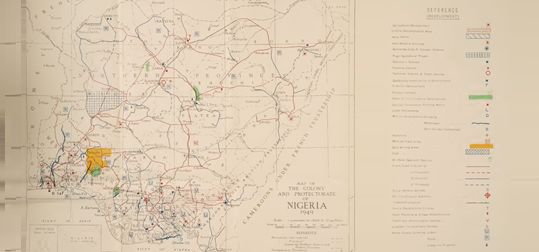
- The Arbitrary Colonial Rule of Law
- 1914: The Amalgamation
- 1922: The Legislative Council Reconstruction Constitution
- 1946: The Three Regions Legislatures Constitution
- 1951: The Federal System Template Constitution
- 1954: The Federal System Constitution
- 1960: The Independence Constitution
- 1963: The First Republic Constitution
- 1966: The Unification Decree (Decree 34, 1966)
- 1967: The War and 12-State Nigeria
- 1976: The 19-State Nigeria
- 1979: The Second Republic Constitution
- 1987: Constitution (Suspension and Modification) (Amendment) Decree No. 24
- 1991: States (Creation and Transitional Provisions) Decree No. 37
- 1993: The Interim National Government (Administration) Decree No. 61
- 1996: The States Creation and Transitional Provisions Decree No. 13
- 1999: The Fourth Republic of Nigeria
The Rule of Law is a political concept wherein only the law is supreme of all national entities. Essentially, in a perfect rule of law situation, the government can't change a law to suit it's claims at the time of any claim. The law, only, then tells what conducts are acceptable and what conducts are unacceptable with their corresponding consequences.
The colonial rule in Nigeria is a scenario of, so called, Rule of Law. This is because orders issued and laws originating from the United Kingdom facilitated both the invasion and the imperialist rule. Thus, in the perspective of the United Kingdom, colonialism was a rule of law; but in the contest of the colonies, like Nigeria, it was a rule by law. One of such laws is the Foreign Jurisdiction Act 1890
This, thus, motivated the formation of protectorates by forceful means in accordance to the provisions of the aforementioned act. Nigeria was a non-existent state before 1914. The term had apriori being used to refer to the geographical environs around the River Niger. From the invasion and conquest of different lands like Lagos, the Northern Caliphate, and the Oil-Rivers, and the Igbos, all by laws and orders originating from the UK. All events that preceeded the amalgamation were sub-amalmagations of different protectorates. First was the amalgamation of the Oil-Rivers Protectorate (alias the Niger Coast protectorate) with the Igbos to form the Southern Protectorate. Next was the amalgamation of the Southern Protectorate with the Lagos Protectorate. As at 1911, what existed were the Northern and Southern Protectorates of Nigeria.
After the 1914 amalgamation, Lord Lugard established a unified administration led by a single Governor and Commander-in-Chief. Under this framework, the existing Executive Council in Lagos saw its authority extended nationwide, while the Legislative Council remained restricted to the Lagos Colony. To provide a broader albeit limited voice, Lugard created the Nigerian Council, an advisory body of 30 nominated members. This council included 17 government officials and 13 "unofficial" members, mostly representing major commercial sectors (like mining and banking) and traditional chiefs representing the interior and coastal populations.
Administratively, the Governor-General oversaw the central government, supported by the Executive Council, while three separate protectorates were each managed by a Lieutenant Governor. To maintain cohesion, critical infrastructure and services, including the military, judiciary, treasury, and railways were centralized.
Despite these structural changes, the system was largely ineffective at true unification. Northern and Southern Nigeria continued to operate as separate entities, and the lack of meaningful representation sparked widespread frustration among Nigerians. This disenchantment eventually forced the collapse of Lugard?? system, paving the way for the Clifford Constitution under his successor, Sir Hugh Clifford.
The Clifford Constitution of 1922 stands as Nigeria?? longest-running constitutional framework, spanning the peaceful interim between the end of the First World War and the conclusion of the Second. Under this system, the Governor administered the nation with the counsel of an Executive Council and a Legislative Council. However, the Executive Council was composed entirely of British officials who were accountable solely to the Governor, though he maintained the authority??ubject to the Secretary of State?? approval??o appoint extraordinary members for specialized expertise.
Despite its longevity, the Council was politically toothless; the Governor held absolute power and was not legally bound to follow its advice, remaining answerable only to the Secretary of State in London. The Legislative Council was similarly dominated by British interests. It consisted of the Governor as President, 26 official members, and a smaller group of unofficial members. Notably, this era introduced the first elected representatives??hree from Lagos and one from Calabar??et the right to vote was strictly limited to adult British subjects or protected persons who had resided in the area for a year and earned an annual income of at least ?100.
While high-ranking officials from the Northern Provinces held seats on the Council, the body?? legislative authority was restricted to the Colony and the Southern Protectorate. Legislation for the North remained the exclusive prerogative of the Governor, although he required the Council?? sanction for any national expenditure. Ultimately, as the political climate shifted following World War II, this constitution failed to satisfy the growing aspirations of the Nigerian people. This disconnect necessitated the drafting of a new framework under Governor Arthur Richards to better reflect the country?? evolving political reality.
The Richards Constitution of 1946 was developed by Sir Arthur Richards, building upon reforms initially proposed by his predecessor, Sir Bernard Bourdillon. Bourdillon had recognized the danger of isolating Northern Nigeria from the South and suggested creating regional councils to bridge this gap. Despite internal colonial fears that a "Federal" system might mirror the administrative friction seen in the United States or Canada, Richards moved forward with these reforms shortly after taking office to head off growing nationalist agitation.
The constitution?? primary objectives were to promote national unity, accommodate Nigeria's diverse elements, and increase indigenous participation in governance. It formally divided the country into a tripartite structure??he Northern, Western, and Eastern Provinces. While it established a Legislative Council with the power to make laws for the entire country, the Governor retained significant reserved powers.
Key features of the 1946 framework included:
Legislative Composition: The Council consisted of the Governor, 16 official members, and 28 unofficial members. For the first time, there was an unofficial majority, with 24 members nominated by the new Regional Councils acting as electoral colleges.
Expanded Franchise: The income qualification for the four elected seats (Lagos and Calabar) was reduced from ?100 to ?50.
Regional Councils: These served as a link between Native Authorities and the central government. However, they remained purely advisory, with no independent legislative or taxing powers.
Northern House of Chiefs: A specific chamber was created for Northern traditional rulers, presided over by the Chief Commissioner.
Integration of Cameroons: Under the 1946 Order in Council, the Cameroons were administered as integral parts of the Nigerian provinces.
Ultimately, the Richards Constitution was criticized for its "top-down" approach and the divisive nature of the tripartite division, which many argued sowed seeds of regionalism. The resulting political friction led Richards' successor, Sir John Macpherson, to initiate a more inclusive constitutional process, eventually resulting in the Macpherson Constitution.
The Macpherson Constitution of 1951 marked a revolutionary shift in Nigerian history as the first framework drafted with widespread public consultation. Moving away from the "top-down" approach of previous governors, Sir John Macpherson initiated a multi-layered review process. This began with a Select Committee and culminated in the Ibadan General Conference, where input was gathered from village, district, provincial, and regional levels via public questionnaires.
Key Structural Changes:
The resulting 1951 Order in Council transformed Nigeria from a unitary state into a more regionalized system:
Legislative Shift: A unicameral central legislature, the House of Representatives, was established. Crucially, the formerly advisory regional councils gained independent legislative powers over specific internal matters.
Executive Reform: The Council of Ministers became the principal policy-making body. While the Governor retained "reserved powers," he was now generally required to act on the Council's advice, signaling an end to absolute autocratic rule.
Regional Autonomy: The three regions (North, West, and East) became distinct political entities with their own Executive Councils and Lieutenant-Governors. A House of Chiefs was also introduced in the Western Region, mirroring the Northern model.
The new legislatures featured an elected majority of Nigerians: North: 90 elected members; West and East: 80 elected members each; Central: The House of Representatives was composed primarily of members selected from the regional houses.
Although the judiciary and public service remained centralized, the Macpherson Constitution set the stage for total independence. By empowering regions and allowing Nigerians to frame their own laws, it shifted the political landscape toward the federalism championed by leaders like Nnamdi Azikiwe, Obafemi Awolowo, and Ahmadu Bello. This era also saw the birth of modern Nigerian political parties, which eventually exerted the pressure necessary to move toward the next constitutional phase.
The Lyttleton Constitution of 1954 and the subsequent 1957 London Constitutional Conference represented the final transition toward Nigerian sovereignty. By this stage, regional leaders had consolidated significant power, often overshadowing the central government.
The 1957 London Conference was the pivotal meeting that involved leaders from Nigeria's three main parties, regional delegates, and British officials. While the Colonial Secretary rejected the proposal for independence in 1959, he agreed to consider 1960 as the target date, provided the 1959 elected House of Representatives requested it.
Key Constitutional Resolutions were: Self-Governance: The Eastern and Western Regions attained self-governing status immediately (August 1957), with the North following in 1959.
Executive Leadership: The office of Federal Prime Minister was created (first occupied by Abubakar Tafawa Balewa). Regional "Premiers" were appointed to lead their respective Houses of Assembly.
Legislative Expansion: The central legislature was expanded to 320 members, and a Senate (Upper House) was established to ensure regional representation at the center.
Regional Strengthening: Lieutenant-Governors were elevated to the rank of Governor. Regions gained independent public services, judiciaries, and marketing boards.
The Cameroons: The Southern Cameroons was elevated to regional status, while the Northern Cameroons remained tied to the Northern Region.
This period transformed Nigeria into a "super-regional" federation where the regions were often more politically and economically potent than the central government. The Governor-General?? role began to recede as the Prime Minister and regional Premiers took control of policy. This decentralized structure set the stage for the 1960 Independence Constitution, finalized under Sir James Robertson, which finally saw Nigeria emerge as a sovereign nation.
The 1960 Constitution of the Federation of Nigeria established the legal framework for Nigeria's independence as a sovereign federation. It structured the nation into three Regions??orthern, Western, and Eastern Nigeria??nd a Federal Territory of Lagos.
The text details the following key areas:
The Crown and Governor-General: Executive authority was vested in Her Majesty and represented by a Governor-General appointed by her. The Governor-General acted as the ceremonial head of state and was advised by a Council of Ministers.
Parliament: A bicameral legislature was established, consisting of a Senate and a House of Representatives. Parliament held the power to make laws for the entire Federation, particularly regarding matters on the "Exclusive Legislative List".
Executive Branch: A Prime Minister led the Council of Ministers, holding collective responsibility for the government.
Fundamental Rights: The Constitution guaranteed essential protections, including the right to life, freedom from inhuman treatment, freedom of expression, freedom of movement, and protection from discrimination.
Citizenship: It defined who became a citizen on October 1, 1960, primarily based on being born in Nigeria and having at least one parent or grandparent also born there. Provisions were also included for citizenship by registration and naturalization.
The Federal Supreme Court: This court held original jurisdiction in disputes between the Federation and the Regions. It also served as the highest court for constitutional interpretation and handled appeals from regional High Courts.
Nigeria Police Force: A single national police force was established, organized and administered according to laws made by Parliament.
Revenue Allocation: The text outlines the distribution of funds, including mining royalties and import duties, among the regions through a "Distributable Pool Account".
Public Service: It established a Public Service Commission responsible for appointments and disciplinary control within the federal civil service.
Constitutional Alteration: Specific, rigid procedures were set for amending the Constitution, often requiring a two-thirds majority in both Houses of Parliament and the consent of a majority of the regional legislatures
The 1963 Constitution of Nigeria established the legal and political foundation for the Federal Republic of Nigeria, marking the transition from a monarchy under the British Crown to a sovereign republic.
Core Governance Structure Establishment of the Republic: The Constitution officially established Nigeria as a Federal Republic, consisting of four Regions (Northern Nigeria, Eastern Nigeria, Western Nigeria and Mid-Western Nigeria) and a Federal territory.
The Presidency: The office of the President was created as the ceremonial Head of State, replacing the Queen of the United Kingdom and the Governor-General.
Parliament: Legislative power was held by a bicameral Parliament comprising the President, a Senate, and a House of Representatives.
Executive Authority: Executive power was vested in the President but exercised through a Prime Minister and a Council of Ministers who were collectively responsible to Parliament.
Regional Autonomy: The document maintained a federal system, granting specific legislative powers to the Regions and recognizing Regional constitutions.
Citizenship Criteria: It defined Nigerian citizenship, including provisions for those born in Nigeria, those born abroad to Nigerian parents, and processes for naturalization.
Right to Life and Liberty: Explicit protections were provided for the right to life and personal liberty.
Freedoms of Expression and Assembly: The Constitution guaranteed the right to freedom of conscience, expression, peaceful assembly, association, and movement.
Protection from Discrimination: Citizens were protected against discriminatory laws and practices based on community, tribe, place of origin, religion, or political opinion.
Property Rights: It established protections against the compulsory acquisition of property without adequate compensation.
Supreme Court of Nigeria: This court was established as the highest judicial body, with original jurisdiction over disputes between the Federation and the Regions, as well as appellate jurisdiction over constitutional matters.
High Courts: High Courts were established for each Region and the Federal territory, with specific powers to enforce the fundamental rights guaranteed by the Constitution.
Legislative Lists: Powers were divided into an "Exclusive Legislative List" (matters reserved for the Federal Parliament) and a "Concurrent Legislative List" (matters where both Federal and Regional bodies could legislate).
Revenue Allocation: The Constitution detailed complex systems for distributing revenue, including mining royalties, excise duties, and import duties, between the Federation and the Regions through a Distributable Pool Account.
Constitutional Amendments: Altering the Constitution required a rigid process, typically involving a two-thirds majority in both Houses of Parliament and the consent of the legislatures of at least three Regions.
For reasons best known to the coup plotters, a coup was plotted and executive. A murderous spite yielded to and made the Nigerian entity bleed. By contrast, the coup that dismissed Kwame Nkrumah from office was bloodless and never yielded to gross embitterment. After the coup which was only successful in the North, the most senior officer at the time, Major-General Aguiyi-Ironsi-Ironsi, took over office and later issue the Decree No. 34 of 1966, often referred to as the Unification Decree. This decree was a pivotal and controversial legislative act promulgated on May 24, 1966.
It fundamentally altered the structure of the country by moving it away from the federal system established in the 1960 and 1963 Constitutions.
Key Provisions of the Decree are:
Abolition of Regions: The Decree formally abolished the existing regional structure (Northern, Western, and Eastern Regions) and replaced them with a group of provinces.
Unification of the Civil Service: It unified the regional and federal civil services into a single National Public Service, removing the autonomy previously held by regional administrations over their own public sectors.
Centralization of Authority: Nigeria was renamed from the "Federal Republic of Nigeria" to simply the "Republic of Nigeria." The federal government became the "National Military Government," and regional governors were renamed "Military Governors of Provinces."
Legislative Supremacy: The decree consolidated legislative and executive powers at the center, effectively suspending the portions of the 1963 Constitution that guaranteed regional legislative independence.
While the Ironsi administration argued that the decree was necessary to end regionalism, ethnic politics, and the instability that had characterized the First Republic, the decree was met with intense suspicion and hostility, particularly in Northern Nigeria. Leaders there feared that a unified civil service would allow more educated individuals from the South to dominate administrative positions across the country, thus, somewhat becoming the catalyst for the "July Counter-Coup" of 1966 and the subsequent anti-Igbo riots in the North, and then the Nigerian Civil War.
The Constitution (Repeal and Restoration) Decree 1967 (Decree No. 13). This decree was enacted to address perceived prejudices in the exercise of executive authority in Eastern Nigeria that threatened the continuance of federal government. It repealed the Constitution (Suspension and Modification) Decree 1967 and restored the authority of previous 1966 decrees (Nos. 1 to 10) as if the repealed decree had never existed.
It expanded the membership of the federal governing body to include "the Military Governors of all the states" and top leadership of the Nigeria Police. It officially changed the title of the "Supreme Commander" to "Commander-in-Chief" for the Head of the Federal Military Government.
States (Creation and Transitional Provisions) Decree 1967 (Decree No. 14). This landmark decree dissolved the existing regional structure (except Mid-Western Nigeria) and divided Nigeria into twelve states. The twelve created states were North-Western, North-Central, Kano, North-Eastern, Benue-Plateau, Central-West, Lagos, Western, Mid-Western, Central-Eastern, South-Eastern, and Rivers.
Lagos was officially designated as the seat of the Federal Government. It provided for the appointment of a Military Governor for each state and mandated that existing laws in the former regions remain in effect within the new states until modified. It established the States Boundaries Delimitation Commission to adjust state borders based on ethnic groups or districts, subject to Supreme Military Council approval.
The Constitution (Financial Provisions) Decree 1967 (Decree No. 15). This decree established a new system for distributing national revenue to accommodate the newly created twelve-state structure. It suspended previous revenue sections of the 1963 Constitution and established a "Distributable Pool Account". Funds were to be paid quarterly to the states based on specific fractions. Six northern states (North-Western, North-Central, Kano, North-Eastern, Benue-Plateau, Central-West) each received 7/100. Western State received the largest share at 18/100. Central-Eastern State was allocated 7/40. Lagos State received 2/100. Rivers State was allocated 1/20.
The Decree No. 12, 1976 issued on February 3, 1976, officially substituted Section 3 of the Constitution of the Federation to list 19 states: Anambra, Bauchi, Bendel, Benue, Borno, Cross River, Gongola, Imo, Kaduna, Kano, Kwara, Lagos, Niger, Ogun, Ondo, Oyo, Plateau, Rivers, and Sokoto. While signed on March 10, 1976, the decree was deemed to have come into force on February 3, 1976.
It repealed the States (Creation and Transitional Provisions) Decree 1967 and its subsequent amendments from 1967 and 1974. Each state is required to have a Military Governor appointed by the Supreme Military Council. A public fund was created for each state to defray expenses incurred by the Military Governor in the performance of his duties. These funds are credited through statutory and non-statutory allocations from the Federal Military Government, as well as other moneys held for the state's government.
Persons holding office in the public service of a state prior to the decree continued to hold their offices in the newly created states. The Supreme Military Council was given the power to appoint a commission responsible for adjusting the boundaries of any created state. The decree's schedule explicitly named the capital for each state, such as Ikeja for Lagos, Abeokuta for Ogun, Akure for Ondo, and Minna for Niger.
The Constitution of the Federal Republic of Nigeria 1979 establishes the supreme legal framework for the country, transitioning it to a federal presidential system (the Second Republic).
The provisions of the constitution:
Supremacy of the Constitution: The Constitution is the supreme law, and any other law inconsistent with its provisions is void to the extent of that inconsistency.
The Federal Republic: Nigeria is declared a single, indivisible sovereign state consisting of 19 States and a Federal Capital Territory.
Motto and Sovereignty: The state's motto is "Unity and Faith, Peace and Progress," with sovereignty belonging to the people from whom government derives its powers.
Legislative Powers: Vested in a National Assembly consisting of a Senate and a House of Representatives for the Federation, and a House of Assembly for each State.
Executive Powers: Vested in the President for the Federation and in Governors for the respective States.
Judicial Powers: Vested in the courts, including the Supreme Court, Federal Court of Appeal, and Federal High Court.
Citizenship: Defines citizenship by birth, registration, or naturalization and outlines the criteria for each.
Fundamental Rights: Guarantees core liberties including the right to life, dignity, personal liberty, fair hearing, private and family life, and freedom of thought, conscience, and religion.
Freedom of Expression and Movement: Protects the right to freedom of expression, peaceful assembly, association, and freedom of movement within Nigeria.
Political Objectives: The state is mandated to promote national integration and prohibit discrimination based on place of origin, sex, religion, status, ethnic, or linguistic ties.
Economic Objectives: The state must manage the national economy to ensure the maximum welfare, freedom, and happiness of every citizen.
Social and Educational Objectives: Provisions are made to ensure social order based on ideals of Freedom, Equality, and Justice, including the promotion of science and technology education.
National Assembly Composition: The Senate consists of 5 members from each state, and the House of Representatives consists of 450 members.
Presidential Qualifications: A candidate for the office of President must be a citizen of Nigeria by birth and at least 35 years of age.
Election of President: Outlines the requirements for being duly elected, including receiving a majority of votes and at least one-quarter of the votes in at least two-thirds of all the states.
The Constitution (Suspension and Modification) (Amendment) Decree No. 24 of 1987 was a pivotal legislative tool used by the military government of General Ibrahim Babangida to reshape the Nigerian federation. At its core, it served as an "update" to the military?? governing framework to account for the first major expansion of states since 1976.
Structural Expansion of the Federation: The primary achievement of Decree No. 24 was the legal validation of two new states. By amending the First Schedule of the (largely suspended) 1979 Constitution, it officially increased the number of states from 19 to 21: Akwa Ibom State (created from the former Cross River State) and Katsina State (created from the former Kaduna State).
Modification of Decree No. 1 of 1984: After the 1983 coup, the military ruled via Decree No. 1 of 1984, which suspended parts of the 1979 Constitution. Decree No. 24 of 1987 acted as a "patch" to this parent decree: It adjusted the list of states and their boundaries. It redefined the geographical and administrative jurisdictions of the High Courts and other judicial bodies to include the newly created territories.
Centralization of Power: Consistent with military rule, the decree reaffirmed the supremacy of the Armed Forces Ruling Council (AFRC). It ensured that: the newly created states were immediately placed under the authority of Military Governors appointed by the President (Babangida) and that the administrative transition??ncluding the sharing of assets and liabilities between the "old" and "new" states??as to be handled under federal military oversight.
The States (Creation and Transitional Provisions) Decree No. 37 of 1991 was a landmark piece of legislation in Nigeria's political history. Issued by the military administration of General Ibrahim Babangida on August 27, 1991, it fundamentally altered the country's federal structure.
The primary purpose of Decree No. 37 was to expand the number of states in Nigeria from 21 to 30. This was done to address long-standing demands for ethnic self-determination and to bring government services closer to the people.
The states created by this decree were: Abia (from Imo), Anambra (from (Old Anambra), Delta (from Bendel), Edo (from Bendel), Enugu (from (Old Anambra), Jigawa (from Kano), Kebbi (from Sokoto), Kogi (from Kwara & Benue), Osun (from Oyo), Taraba (from Gongola), Yobe (from Borno).
1993: The Interim National Government (Administration) Decree No. 61The Interim National Government (Administration) Decree No. 61 of 1993 was one of the most controversial and short-lived pieces of legislation in Nigeria?? political history. It was the legal instrument that established the Interim National Government (ING) following the annulment of the June 12, 1993, presidential election.
After General Ibrahim Babangida annulled the 1993 election (widely believed to have been won by M.K.O. Abiola), the country faced massive civil unrest. To "step aside" while maintaining some semblance of military control, Babangida signed Decree No. 61, handing over power to a non-elected civilian body rather than the winner of the election.
The decree outlined the structure and powers of the Interim Government, which was headed by Chief Ernest Shonekan. It vested the executive powers of the Federation in the Interim National Government. Chief Shonekan was designated as the Head of State and Commander-in-Chief of the Armed Forces (though his control over the military was largely symbolic).
The primary task for the Interim Government was to conduct a fresh presidential election and oversee the full transition to civil rule by March 31, 1994. Crucially, the decree retained General Sani Abacha as the Secretary (Minister) of Defence, which effectively kept the military's hand on the pulse of the government.
The Interim Government faced a "crisis of legitimacy" from day one. On November 10, 1993, a Lagos High Court presided over by Justice Dolapo Akinsanya declared the Interim Government illegal. The court ruled that since Babangida had signed away his own power to make decrees (by virtue of his "stepping aside"), he had no legal authority to sign Decree No. 61 into law. This ruling created a power vacuum that General Sani Abacha used as the clause to take over in a bloodless coup on November 17, 1993.
The Decree No. 13 of 1996 is the landmark legal instrument that finalized Nigeria?? current structure of 36 states. Issued by the military regime of General Sani Abacha on October 1, 1996 (Nigeria's 36th Independence Anniversary), it was the final result of recommendations made by the Arthur Mbanefo-led Committee on States, Local Government Creation, and Boundary Adjustment.
The decree carved out six new states from the existing 30, ensuring each of the six "Geopolitical Zones" received one additional state. Alongside the states, the decree created 183 new Local Government Areas (LGAs), bringing the national total to 774. It provided the legal framework for "transitional provisions," which included the appointment of Military Administrators for the new states and the sharing of assets/liabilities between the "mother" states and the newly created ones. The States Created (The "1996 Batch")
The new states created were Bayelsa (from Rivers), Ebonyi (from Abia and Enugu), Ekiti (from Ondo), Gombe (from Bauchi), Nasarawa (from Plateau) and Zamfara (from Sokoto).
The 1999 Constitution of the Federal Republic of Nigeria is the supreme law of the country, providing the legal and political framework for its governance. The updated version incorporates major alterations made in 2010 (1st, 2nd, and 3rd), 2017 (4th), and 2023 (5th) to address evolving national needs.
The Constitution establishes Nigeria as an indivisible and indissoluble sovereign state operating as a Federation of 36 states and a Federal Capital Territory (Abuja). It follows a tripartite division of powers:
Legislative Powers: Vested in the National Assembly (Senate and House of Representatives) for the Federation and State Houses of Assembly for each state.
Executive Powers: Vested in the President for the Federation and Governors for the states.
Judicial Powers: Vested in the courts, including the Supreme Court, Court of Appeal, Federal High Court, and State High Courts.
The constitution provides the following basic framework:
Chapter I (General Provisions): Asserts the supremacy of the Constitution over all other laws and defines the federal structure.
Chapter II (Fundamental Objectives): Outlines the government's duties, including social, economic, and political objectives such as promoting national unity and food security.
Chapter III (Citizenship): Defines how Nigerian citizenship is acquired through birth, registration, or naturalization.
Chapter IV (Fundamental Rights): Guarantees essential rights, including the right to life, personal liberty, fair hearing, and freedom of expression, movement, and religion.
Executive Bodies: Establishes several federal bodies like the Independent National Electoral Commission (INEC), the National Judicial Council, and the Code of Conduct Bureau.
The Constitution has been revised multiple times to improve governance and institutional efficiency:
2010 (1st, 2nd, and 3rd Alterations): These amendments focused on electoral reforms, judicial restructuring, and the financial independence of the National Assembly. A notable change was the establishment and composition of the National Industrial Court as a superior court of record.
2017 (4th Alteration): Addressed various administrative and legislative matters.
2023 (5th Alteration): The most recent set of amendments, aimed at further refining the legal framework of the federation.
The Constitution includes schedules that detail specific administrative lists, such as:
Exclusive Legislative List: Matters only the National Assembly can legislate on.
Concurrent Legislative List: Matters both Federal and State governments can legislate on.
Oaths: Prescribed oaths of office for the President, Governors, and other public officers to ensure they defend the Constitution.
- Arbitrary Rule and Amalgamation: Early governance was dictated by UK laws like the Foreign Jurisdiction Act 1890, which facilitated the forceful formation of protectorates.
- In 1914, Lord Lugard amalgamated the Northern and Southern protectorates into a single entity, though they continued to operate largely as separate units.
- Clifford Constitution (1922): Introduced the first elected representatives (for Lagos and Calabar) but maintained absolute power in the hands of the British Governor.
- Richards Constitution (1946): Divided Nigeria into three regions (North, West, and East) and established a Legislative Council for the entire country to promote national unity.
- Macpherson Constitution (1951): The first framework drafted with widespread public consultation, it granted regions independent legislative powers and established a central House of Representatives.
- Lyttleton Constitution (1954): Finalized the transition toward sovereignty, creating the office of the Federal Prime Minister and granting self-governing status to the region.
- 1960 Independence Constitution: Established Nigeria as a sovereign federation under the British Crown, with a bicameral parliament and a national police force.
- 1963 Republican Constitution: Formally transitioned Nigeria to a Federal Republic, replacing the Queen with a ceremonial President as Head of State.
- Centralization (1966): Following a coup, the Unification Decree (Decree 34) abolished regions and centralized authority, a move that sparked intense hostility and contributed to the Nigerian Civil War.
- State Expansion: To address ethnic self-determination and administrative efficiency, the military progressively increased the number of states:
- 1967: Divided the country into 12 states.
- 1976: Expanded to 19 states.
- 1987: Increased to 21 states.
- 1991: Increased to 30 states.
- 1996: Finalized the current structure of 36 states and 774 Local Government Areas.
- 1979 Constitution: Briefly returned Nigeria to civilian rule as a federal presidential system (the Second Republic) before military intervention resumed in 1983.
- Interim National Government (1993): A short-lived civilian body established by Decree No. 61 following the annulment of the June 12 election; it was later declared illegal by the courts.
- The 1999 Constitution: This is the current supreme law of Nigeria. It defines the country as an indivisible sovereign state with a tripartite division of power between the Legislative, Executive, and Judicial branches.
- Modern Alterations: The document has been updated through several Alteration Acts (2010, 2017, and 2023) to reform the electoral process, restructure the judiciary (such as establishing the National Industrial Court), and refine the legal framework of the federation.